Wednesday, April 14, 2010
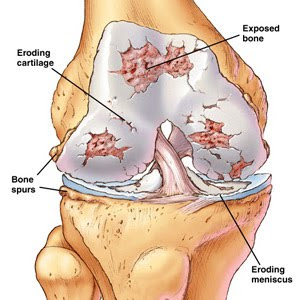
Managing Knee Osteoarthritis (OA)

Monday, April 12, 2010
Non-Invasive Management of Injuries
Pain whether it be from a contusion, numbness, tingling, or inflammatory, the usual rest, ice and range of motion through approved daily power stretches are appropriate. See your local therapist for more options. A variety of non-invasive modalities may be used to self-manage your pain, such as:
1. Deep heat treatments - used for muscle spasms, sprains, strains and tendinitis after 48 hours of your injury. It can also be used to treat contractures, chronic arthritis and bursitis. Heat treatments can include hot baths, heating pads, and even paraffin (hot wax). 
2. Cold therapy treatments - applied immediately after injury to relieve pain and reduce internal bleeding and swelling. Ice treatments include cold packs, ice massage applicators and cold water.
3. Taping treatments - elastic tape applied over a muscles to reduce pain and inflammation, promote relaxation, and support muscles for movement. Tape is non-restrictive and allows full range of motion. (Must be applied by your therapist, and educated for self-application)
4. Topical biomedicine - natural pain relieving gels like biofreeze or sombra stimulate nerve endings in the skin and desensitizes the sensation of pain. Good for conditions which are close to the skin.
5. Massage treatments - used to decrease inflammation in muscle, tendons, and joints. Can reduce pain, improve range of motion, and improve flexibility. Good for inflammatory, stiffness, strains/sprains, tendinitis, and bursitis.
Rehab Management, Vol.23 No.2
Wednesday, April 7, 2010
Prevent Knee Injuries

Resources please share this helpful tool with all your team members and see your on-site therapist for further prevenative training.
- When kneeling always come down with one leg at a time.
- Always place two hands on your knee as you go down.
- To increase flexion at the knee and hip come down with knee falling behind toes.
- Weight must be distributed through the heel, not through the toes.
Monday, April 5, 2010
Manage Your Soreness with a Massage Stick
Great for the neck, shoulders, arms, upper/lower back, gluts, IT band, thighs, hamstrings, quads, calves and feet!
Recommended and used by professional athletes, sports trainers, massage & physical therapists, chiropractors and doctors. See your on-site therapist and ask how you can get one!
Thursday, April 1, 2010
Runners - Pain or Pleasure
- IT Band Syndrome
- Patellofemoral Syndrome,
- Achilles Tendinitis
- Plantar Fasciitis
An ounce of prevention equals a pound of pain free running. Remember to stretch before and after your run. Consider equipment changes such as new shoes which allows for full foot accommodation. Orthotics also will help keep your ankle in alignment as you run reducing risk for injury and pain. See your on-site therapist today these valuable tools. Orthotics now are only $40.00 for current employees serviced through One Accord Industrial!
Advance for Physical Therapy and Rehabilitation Vol.21 No.5
Monday, March 29, 2010
Concussion Conundrum - Brain Injury Month
- Be 18 or older
- Make sure you have not experienced loss of conciousness
- Do no have amnesia
- No other symptoms are present
- Able to pass all functional tests
Reference: Advanced Physical Therapy and Rehabilitation Vol.21 No.6
Wednesday, September 16, 2009
How to Prevent a Recordable Injury #6 - Keep Your Load Close to Your Body!

Lifting a 10lb. object away from your body = 100lb of pressure on your back
Lifting a 10lb object close to your body = 10lb of pressure on your back
Monday, September 14, 2009
Is Your Neck In Allignment?

- Use a pillow or lumbar support if you sit for long periods of time for your work.
- Use a lumbar support or lean your seat forward in your car to avoid slouching and improve your safety awareness.
- Avoid large recliners when watching television as this promotes improper posture.
- Use a smaller pillow or roll to keep your neck straight or in neutral while sleeping.
- Avoid reading in bed, use a well let area with good seated posture.
- Avoid talking on the telephone for long periods of time or holding the phone with your shoulder.
Wednesday, September 2, 2009
On The Job - Risk Factors

Wednesday, August 12, 2009
On The Job - Risk Factors
Awkward PosturesA risk factor is anything that increases the likelihood of developing a muscoloskeletal injury. Awkward postures like the one shown above can cause serious risk to the low back if done repetitively. When lifting use the "stick method", keeping the back in neutral and avoiding stress on the low back by keeping the shoulders back allowing you to bend but not break. See illustration below.
Wednesday, July 29, 2009
Injury Prevention Tip
Gauravi Merchant, PT, MPA, executive director, Physicians Choice Physical Therapy, West Los Angeles, says PTs can often help people prevent fall-related injuries by helping them to improve their balance and offering tips for fall recovery and prevention. ‘'Teaching people the right body mechanics, stretching and strengthening the weak muscles—and by that, preventing injuries......from overuse and poor body mechanics.Her tips for clients:
1. For injury prevention: good posture, good body mechanics, improving core strength, and regular exercise.
2. For low back pain prevention and recovery: good posture and body mechanics at all times; core strengthening, "We use Pilates-based physical therapy to reeducate muscles and improve core strength; and regular aerobic exercises such as swimming and cycling."
3. For recovery: ice first with all acute back injuries......education about what to do/not do in terms of body mechanics and posture; home exercise program to recover and prevent future back injuries.
* Article taken from rehab management or www.rehabpub.com
Thursday, April 9, 2009
How to Prevent a Recordable Injury #6

Thursday, March 26, 2009
How to Prevent a Recordable Injury #5

Tuesday, March 3, 2009
How to Prevent a Recordable Injury #4
Do you know what caused your injury or discomfort? If we are honest with yourself, we know exactly what we do at work or home that creates acute and sometimes chronic conditions. If we eliminate or decrease the frequency of activities at work or at home for your "weekend warriors". Doing the same repetitive motion at home just perpetuates the inflammation and degenerative process. Ask your therapist to provide you with strategies to perform these activities at work and at home. Keep in mind that some soreness and discomfort is normal with daily activity or even after a trip to see your therapist after 1st aid or physical therapy due to the nature of the intervention. The key is to eliminate or decrease the root cause!Contact a physical therapist today, call (877) 836-8652 or email us at industrial@oneaccordservices.com
Monday, February 16, 2009
Top 3 New Years Resolutions That Should be on Your List!

Reference: www.azblue.com
Friday, February 13, 2009
How to Prevent a Recordable Injury #3

- If you have an incident within 24-48 hours DO NOT apply heat.
- Apply heat to general achiness, stiffness and soreness.
- Heat application averages about 10 minutes, and remember to use layers of clothing or towels, as to avoid superficial burns.
Thursday, February 5, 2009
How To Prevent A Recordable Injury - Part 2
Thursday, January 29, 2009
How To Prevent A Recordable Injury - Part 1
Injury prevention is one of many things that highly impact the wellness of an employee. Without focusing on employer support and responsibility we have found that curtain actions that employees can take which will generally help them overcome their presenting complaints. The following suggestions are guidelines for your quick recovery. If you have any questions, please call or email our 24 hour consultation line for more information. If any suggestion increases your symptoms or of which you have questions, please stop the activity until you consult with your therapist.