
CPR. A lifesaving action.
When an adult has a sudden cardiac arrest, his or her survival depends greatly on immediately getting CPR from someone nearby. Unfortunately, less than 1/3 of those people who experience a cardiac arrest at home, work or in a public location get that help. Most bystanders are worried that they might do something wrong or make things worse. That’s why the AHA has simplified things.
Don’t be afraid. Your actions can only help.
It’s not normal to see an adult suddenly collapse, but if you do, call 911 and push hard and fast in the center of the chest. Don’t be afraid. Your actions can only help. Take a minute and look around this site and invite your friends! Increasing the number of people who know about Hands-OnlyTM CPR will increase the chance that someone can help when an adult suddenly collapses, and more lives can be saved.
Hands-OnlyTM CPR works
Hands-OnlyTM CPR, performed by a bystander has been shown to be as effective as “conventional” CPR in emergencies that occur at home, work or in public. There are only two steps to remember:
1) Call 911
2) Push hard and fast in the center of the chest.
Please click here for a video and further instructions.
Ref: American Red Cross, http://handsonlycpr.org/
Wednesday, May 5, 2010
Wednesday, April 14, 2010
Managing Knee Osteoarthritis (OA)
Knee osteoarthritis (OA) is a condition which undeniably we will all face in our life time. It is due to aging process and the best tactic to manage OA is going back to basics. The American Academy of Orthopaedic Surgeons recommend self-management techniques, such as exercise and trimming down if you're overweight. Here are some suggested guidelines: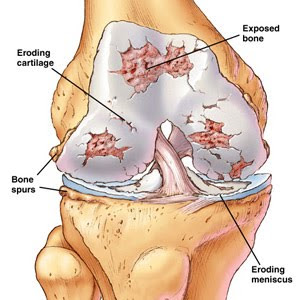

1. Weight loss - If you body mass index (BMI) is more than 25, loosing 5% of your body weight can help reduce OA.
2. Exercise - Make an impact using aerobic exercise such as walking apart of your day to day schedule. Incorporate flexibility and stretching, then strengthening exercises focusing on the quads and hamstrings.
3. Pain reducing medication - Take non-steroidal anti-inflammatory medications are a good choice as long as it does not upset your stomach.
4. Injections - There are two types of injection, cortisone and hyaluronic acid. Seek your physician to see which one will be right for you.
5 Taping - Supporting the knee cap or the "patella" can offer short term relief to avoid popping sensations. This option can progress to wearing a semi-custom knee brace which can help provide relief.
6. Custom orthotics - However the correction of foot abnormalities to correct OA is still being discussed, proper alignment and decreased shock while walking on concrete will help reduce knee pain.
* See your therapist for more information regarding how you can get "back to basics" to reduce knee pain.
Health Monitor Vol.2 No.3


Monday, April 12, 2010
Non-Invasive Management of Injuries
Pain whether it be from a contusion, numbness, tingling, or inflammatory, the usual rest, ice and range of motion through approved daily power stretches are appropriate. See your local therapist for more options. A variety of non-invasive modalities may be used to self-manage your pain, such as:
1. Deep heat treatments - used for muscle spasms, sprains, strains and tendinitis after 48 hours of your injury. It can also be used to treat contractures, chronic arthritis and bursitis. Heat treatments can include hot baths, heating pads, and even paraffin (hot wax). 
2. Cold therapy treatments - applied immediately after injury to relieve pain and reduce internal bleeding and swelling. Ice treatments include cold packs, ice massage applicators and cold water.
3. Taping treatments - elastic tape applied over a muscles to reduce pain and inflammation, promote relaxation, and support muscles for movement. Tape is non-restrictive and allows full range of motion. (Must be applied by your therapist, and educated for self-application)
4. Topical biomedicine - natural pain relieving gels like biofreeze or sombra stimulate nerve endings in the skin and desensitizes the sensation of pain. Good for conditions which are close to the skin.
5. Massage treatments - used to decrease inflammation in muscle, tendons, and joints. Can reduce pain, improve range of motion, and improve flexibility. Good for inflammatory, stiffness, strains/sprains, tendinitis, and bursitis.
Rehab Management, Vol.23 No.2
Wednesday, April 7, 2010
Prevent Knee Injuries

Ergonomic prevention has grown dramatically in recent years. As a result, there has been an increased awareness of proper ergonomics on the job-site. This year we have seen a large amount of knee injuries occur due to improper body mechanics when kneeling and squatting. Many of these injuries start out as non-traumatic but can over time due to improper mechanics progress into chronic more serious injuries affecting not only your performance but your health and time loss.
Resources please share this helpful tool with all your team members and see your on-site therapist for further prevenative training.
Resources please share this helpful tool with all your team members and see your on-site therapist for further prevenative training.
- When kneeling always come down with one leg at a time.
- Always place two hands on your knee as you go down.
- To increase flexion at the knee and hip come down with knee falling behind toes.
- Weight must be distributed through the heel, not through the toes.
Monday, April 5, 2010
Manage Your Soreness with a Massage Stick
Make your muscles happy! There is a new way to receive a massage without the cost and time of using a massage therapist. The use of a self muscle-friendly solo massage tool will assists individuals with deep tissue massage, trigger point therapy and sports massage therapy. These tools helps relieve sore, tight and cramping muscles by helping restore muscular balance.
Great for the neck, shoulders, arms, upper/lower back, gluts, IT band, thighs, hamstrings, quads, calves and feet!
Recommended and used by professional athletes, sports trainers, massage & physical therapists, chiropractors and doctors. See your on-site therapist and ask how you can get one!
Great for the neck, shoulders, arms, upper/lower back, gluts, IT band, thighs, hamstrings, quads, calves and feet!
Recommended and used by professional athletes, sports trainers, massage & physical therapists, chiropractors and doctors. See your on-site therapist and ask how you can get one!
Thursday, April 1, 2010
Runners - Pain or Pleasure
Running is great way to endeavor to stay in shape, loose weight, and burn calories, but can often lead to overuse injuries, particularly the knee, shin, foot, hip and back. The most common conditions which affect runners are:
- IT Band Syndrome
- Patellofemoral Syndrome,
- Achilles Tendinitis
- Plantar Fasciitis
An ounce of prevention equals a pound of pain free running. Remember to stretch before and after your run. Consider equipment changes such as new shoes which allows for full foot accommodation. Orthotics also will help keep your ankle in alignment as you run reducing risk for injury and pain. See your on-site therapist today these valuable tools. Orthotics now are only $40.00 for current employees serviced through One Accord Industrial!
Advance for Physical Therapy and Rehabilitation Vol.21 No.5
Monday, March 29, 2010
Concussion Conundrum - Brain Injury Month
A concussion or as some call it a Mild Tramatic Brain Injury not only affect the athletic population but also the industrial athlete. Dr. Keven Guskiewics, PhD, ATC recently set the following guidelines to consider when you the employee or patient should consider when assessing your symptoms.
Reference: Advanced Physical Therapy and Rehabilitation Vol.21 No.6
- Be 18 or older
- Make sure you have not experienced loss of conciousness
- Do no have amnesia
- No other symptoms are present
- Able to pass all functional tests
Reference: Advanced Physical Therapy and Rehabilitation Vol.21 No.6
Monday, February 1, 2010
Safety Flash - Super Bowl Week
Are you doing the proper things to help avoid a physical breakdown? If you are experiencing any of the following, see your therapist immediately!
1. Abnormal swelling
2. New cracking or clicking from your joints
3. Pain with any movement
4. Joints feel warm or even hot to touch
5. Feeling of a bump or tightness in or around a muscle
Remember, spend extra time stretching, extra time using ice, and extra time asking questions. Safety comes 1st! The best way to avoid an injury is to avoid it from ever happening.
Monday, December 28, 2009
Medical Advice on the Web
More and more people are using the Internet for their health care needs. Experts say up to 75% of patients use the Internet for its vast information, much like a vending machine. Patients who are more informed about their health condition are more likely to use a health care practitioner for their health needs.
Just as important as finding a good health care professional is knowing where to search for information. Below is a list of trusted resources which you can use when searching the web, these links can also be found under the health and wellness link on our newsletter. Social Medical Networks are growing as wellness and prevention play an important role in our health care.
As Internet based information play an active role, it should never take the place of an expert health care professional. Seek your local provider for more information.
Medline Plus
Health Finder
Medical Library Association
Resource: Medical Library Association
Monday, November 23, 2009
Disney Sees the Benefit of On-Site Therapy
Therapists Keep Disney Cast Members Fit and Safe

Athletic trainers and physical therapy specialists from St Joseph Hospital, Orange, Calif, have combined their expertise as part of a "partnership" between the hospital and Disneyland Resort, Anaheim, Calif, that has created an athletic training program for the resort's employees or "cast members," helping the "Happiest Place on Earth" be one of the healthiest places as well.
Designed for Disney's hundreds of entertainment cast members (who must maintain exceptional physical endurance), the program found its roots with the entertainment division nearly 15 years ago, and is one of a number of integrated efforts that have helped to decrease work-related entertainment injuries at Disneyland Resort by one-third over the past 10 years. The resort's additional 20,000 cast members, who range from food service to custodial to merchandise, are also coached by St Joseph's athletic trainers.
Currently, 22 athletic trainers work at the Disneyland Resort, six on the operations team, 15 on the entertainment team, and an athletic training coordinator. The athletic coordinator, along with the resort's safety team, oversees the athletic training program with support from physical and occupational therapists.
In addition, rehabilitation therapists from St Joseph Hospital work on-site at the resort, evaluating and treating cast members in order to prevent work-related injuries. Also, job-site assessments are performed to evaluate cast members and their work areas to review body mechanics and provide tips on how they can more safely perform their work duties.
"It takes an entire team of athletic trainers to take care of all of the cast members at the resort," says Janay Coleman, a parade dancer. "They help us avoid injuries. There's always someone nearby to make sure I'm OK, and they're even there to assist us with nutrition guidance."
Wednesday, November 4, 2009
Swine Flu - FAQ
H1N1 - Swine Flu Information
Q: What is swine flu?
A: Influenza is a virus that infects people, birds, pigs and other animals such as ferrets. Swine flu, or swine influenza, is a form of the virus that normally infects pigs. There are many forms of flu, and the different varieties have the ability to exchange genes with one another. The form of flu that originated in Mexico is a genetic mixture of viruses that have been seen in pigs, birds and people. It’s being called a swine flu because the overall structure of the virus is of the type that affects pigs.
Q: How do people catch swine flu?
A: Studies are ongoing about how this particular swine flu is transmitted. Flu is generally transmitted through the respiratory tract. Droplets of infected body fluids may carry flu when people cough or sneeze. Studies indicate that masks called N95 respirators, when properly used, filter germs from the breath and hamper the spread of flu. Neither contact with pigs nor eating pork has been linked to the spread of the flu.
Q: What are the symptoms of swine flu?
A: About one to four days usually elapse between the time a person is infected and the onset of symptoms. Influenza normally causes symptoms such as coughing, sneezing, headaches and body aches, fever, chills, and sometimes vomiting and diarrhea. Swine flu causes the same symptoms, and may be difficult to distinguish from other strains of flu and respiratory illnesses. Severe cases of flu that lead to death are normally seen in very young and very old people whose immune systems are too weak to fight off the virus. Adults with severe illness may also have difficulty breathing, dizziness, confusion, or severe vomiting and diarrhea.
Q: Is there a vaccine against the swine flu that’s now spreading?
A: Flu vaccines generally contain a dead or weakened form of a circulating virus. The vaccine prepares the body’s immune system to fend off a true infection. For the vaccine to work, it must match the circulating, “wild-type” virus relatively closely. There is no vaccine currently that exactly matches the swine flu. The seasonal flu vaccine isn’t effective against swine flu, said the CDC. Vaccine makers have contacted the World Health Organization about obtaining samples of the virus needed to make a vaccine. Making flu vaccine can take three to six months. No decision has been made to order a vaccine against swine flu, Besser said.
Q: How can I tell if my child is sick?
A: Children who are breathing abnormally fast or slowly may have respiratory illness. Bluish skin indicates a need for quick attention. Children who are abnormally sluggish and sleepy, irritable, or have fever or rash may also need attention.
Q: Have there been outbreaks of swine flu before?
A: Yes. Health officials said in 1976 that an outbreak of swine flu in people might lead to a pandemic. Widespread vaccination was carried out in the U.S. before experts determined that the virus was not dangerous enough to cause a pandemic. Swine flu occasionally infects people in the U.S. without causing large outbreaks. From 2005 through January 2009, there were 12 reported swine flu cases in the U.S. None of them caused deaths.
Q: Why are health officials concerned about the outbreak of swine flu?
A: When flu viruses mix genes with one another, they can take on new forms. New flu viruses are harder for the human immune system to defend against. With little or no opposition from the immune resistance, the virus can grow quickly and invade many tissues and organs. They may also set off a harmful immune overreaction in the body, called a “cytokine storm,” that may be lethal in itself. The swine flu virus from Mexico may have the ability to spread quickly and kill people, possibly causing a worldwide pandemic, according to the WHO. Researchers are conducting studies to determine how easily the virus spreads in people and how dangerous it is.
Q: What’s a flu pandemic?
A: A flu pandemic occurs when a new influenza virus spreads quickly and few people have immunity. While influenza viruses were only discovered about a century ago, researchers believe flu pandemics hit about two or three times each century. Some pandemics kill a few million people globally. The most severe flu pandemic on record was the 1918 Spanish Flu. Researchers estimate it killed about 50 million people around the world.
Q: Are there any similarities between the swine flu and earlier pandemic viruses?
A: Flu viruses are classified by two proteins on their surface, called H for hemagglutinin and N for neuraminidase. The swine flu found in Mexico and the 1918 Spanish Flu viruses are of the H1N1 subtype. Both viruses appear to have originated in animals. Researchers believe the Spanish Flu spread to people from birds. The two viruses are not identical, and there are still many genetic differences between them that researchers are studying.
Q: Do all H1N1 viruses cause pandemics?
A: No. H1N1 descendants of the Spanish Flu virus continue to circulate in people and sometimes cause outbreaks of seasonal flu.
Q: Are there drugs that treat swine flu?
A: Yes. Roche Holding AG’s Tamiflu and GlaxoSmithKline Plc’s Relenza both react against swine flu. The U.S. Department of Homeland Security has released 25 percent of its stockpile of Tamiflu and Relenza, according to Secretary Janet Napolitano. Flu viruses sometimes develop resistance to antiviral drugs. The human form of H1N1 seasonal flu that’s currently circulating is resistant to Roche’s Tamiflu (not Relenza). If the two viruses were to exchange genes, the swine flu might become resistant, too. The drugs should be administered within the first 48 hours of the onset of symptoms, according to the CDC. Tamiflu and Relenza may also help prevent swine flu in people who have been exposed to someone who was sick.
Q: How else can I protect myself from swine flu?
A: Personal hygiene measures, such as avoiding people who are coughing or sneezing and frequent hand-washing, may prevent flu infection. Those who aren’t health professionals should avoid contact with sick people. People who get sick with flu symptoms should stay home. Studies have suggested that closing schools, theaters, and canceling gatherings in the early stages of a pandemic can limit its spread. Such measures would likely take place if health officials determine that the virus is spreading quickly enough and is deadly enough to cause a pandemic.
Information taken from: http://www.bloomberg.com/apps/news?pid=20601087&sid=aWcd0Nbgc_R4
Monday, November 2, 2009
Health Coaching...Building a Better Life
 Xtreme X20
 adds vital minerals and electrolytes to your water to help you hydrate and boost your health and wellness.
Xtreme x20 is an all-natural, organic mineral complex derived from pristine ocean sources. Harvested in its natural form, Xtreme X20 uses a patented processing method to ensure the highest level of purity and safety before packaging this powerful produce into individual, ready-to-use "sachets".
Hydrate - Increases the body's hydration at the cellular level.
Mineralize - Contains calcium, magnesium, and over 70 naturally occurring trace minerals.
Revitalize - Creates numerous beneficial antioxidants to help slow the aging process and fight against physical stress.
For more information, contact an Xtreme X20 representative at hyratedaily@aol.com or call (602) 316-5410
Wednesday, October 21, 2009
OneAccord Industrial Launches New Website
Welcome to the Future of Wellness and Prevention!
The 21st Century is the era of service, and our company is perfectly positioned to help you meet the growing needs of your company. We must acknowledge that work safety begins with addressing the root cause. As a leader in on-site occupational health, we can provide you with a proven, and validated process that can save you time and money; here's what we can do for you:
- On-Site Occupational Health
- Ergonomic/Safety Training
- Physical Demands Analysis
- WorkSTEPS Testing
- Reduced Post-Injury Workman's Comp Care
- Redwood Toxicology/Drug Testing
- Skilled Manual Physical Therapy
- On-line Safety Newsletter/Resource List
- Reduce Workmans Compensation Claims
- Access to Vast Network Providers
Please explore the web site to find out about our full services. It would be my pleasure to set up a follow-up meeting with you and your staff regarding our program and the success that we know we can bring to your company in the area of industrial safety. Thank you for your interest in providing your employees with a much needed service. Call or email us for more information or to schedule a free consultation with one of our consultants.
Respectfully,
Mathew Thomas, PT, DPT, LAT, ATC
Partner, OneAccord Industrial Services, LLC.
Monday, October 19, 2009
Now Offering: Custom Orthotics
Vasyli Medical Orthotics – A Natural Cure
It is estimated that > 75% of the population suffer from foot pain from excessive movement and factors such as the unnatural, hard flat surfaces we walk on daily. These can often disrupts normal knee function and hip alignment and increases forces on the lower back muscles.
By realigning the lower limb to its natural angle VASYLI orthotics ensure correct foot function and help relieve common biomechanical complaints.
Key Injuries which VASYLI orthotics can correct:
Key Injuries which VASYLI orthotics can correct:
• Plantar Fasciitis

• Achilles Tendinitis
• Metatarsalgia
• Hallux Abducto Valgus
• Tired/Aching legs
• Patello Femoral pain
• Lower Back pain
• Tibial Stress syndrome
• Ilio-tibial band syndrome
We offer several types of customized orthotics for all foot sizes and conditions.
Each Vasyli orthotic will be available for all non-work conditions, and now offered at $80.00 per pair of customizable orthotics.
Available now, contact your therapist today and see how you can save 50% your next custom pair of orthotics! (Normally custom orthotics can run between $300-$400)
Wednesday, September 16, 2009
How to Prevent a Recordable Injury #6 - Keep Your Load Close to Your Body!

When you lift objects like boxes, remember to keep them close. A dirty shirt is better than a clean shirt when it comes to preventing a back injury. IF you lift objects and keep them away from your body, you are putting increased pressure on your arms and back. You do the math!
Lifting a 10lb. object away from your body = 100lb of pressure on your back
Lifting a 10lb object close to your body = 10lb of pressure on your back
Monday, September 14, 2009
Is Your Neck In Allignment?
Did you know the weight of your head is roughly 8% your body weight? This constitutes about 12 to 15 pounds that sits over your shoulders. The ideal posture that constitutes proper alignment is having your ears lined up with the top of your shoulder. Poor posture, as in a forward head, can lead to a long list of chronic conditions, all stemming from poor alignment or posture. A foreword head is causing your neck to work 3x harder than normal. Give your head a break and get back into alignment. Follow these simple tools through out your day to stay in alignment.

- Use a pillow or lumbar support if you sit for long periods of time for your work.
- Use a lumbar support or lean your seat forward in your car to avoid slouching and improve your safety awareness.
- Avoid large recliners when watching television as this promotes improper posture.
- Use a smaller pillow or roll to keep your neck straight or in neutral while sleeping.
- Avoid reading in bed, use a well let area with good seated posture.
- Avoid talking on the telephone for long periods of time or holding the phone with your shoulder.
Wednesday, September 2, 2009
On The Job - Risk Factors

Neutral Wrist
Neutral wrist positioning is center position between flexing and extending. Working in neutral wrist positioning can help avoid harmful conditions such as tendinitis, bursitis, and nerve entrapment. Repetitive bending and prolonged awkward wrist positions can cause cumulative trauma to the wrist and hand, sometimes causing long term weakness and numbness. So next time you are at work, remember to keep your wrists in neutral. If you cannot or need more direction in how to do so. Please contact your site therapist.
Monday, August 31, 2009
Supplemental Choices for Women

Osteoporosis --- Iron Deficiency --- Heart Disease
Calcium & Vitamin D - Low intake increases your risk of osteoporosis causing bone loss. Choose milk, yogurt and calcium fortified fruit juices as a source of calcium and vitamin D.
Fish Oils - Low intake in fish oil or Omega-3 fatty acids can increase risk of heart disease. Heart disease is the number one cause of death of among woman in the united states. The American Heart Association recommends two servings of fatty fish per week.
Folate - Important for pregnancy to avoid neurological conditions from developing. Choose green leafy vegetables; oranges and orange juice.
Iron - Women loose blood through menstruation, which can lead to iron deficiency. Choose lean meat, fish, poultry, spinach, dried beans, and fortified cereals.
Dietary Fiber - Reduce your risk of heart disease and maintain healthy weight. Choose fruits, vegetables, and whole grains breads.
Source: Mayo Clinic Health Solutions
Wednesday, August 12, 2009
On The Job - Risk Factors
 Awkward Postures
A risk factor is anything that increases the likelihood of developing a muscoloskeletal injury. Awkward postures like the one shown above can cause serious risk to the low back if done repetitively. When lifting use the "stick method", keeping the back in neutral and avoiding stress on the low back by keeping the shoulders back allowing you to bend but not break. See illustration below.

Wednesday, July 29, 2009
Injury Prevention Tip
 Gauravi Merchant, PT, MPA, executive director, Physicians Choice Physical Therapy, West Los Angeles, says PTs can often help people prevent fall-related injuries by helping them to improve their balance and offering tips for fall recovery and prevention. ‘'Teaching people the right body mechanics, stretching and strengthening the weak muscles—and by that, preventing injuries......from overuse and poor body mechanics.
Her tips for clients:
1. For injury prevention: good posture, good body mechanics, improving core strength, and regular exercise.
2. For low back pain prevention and recovery: good posture and body mechanics at all times; core strengthening, "We use Pilates-based physical therapy to reeducate muscles and improve core strength; and regular aerobic exercises such as swimming and cycling."
3. For recovery: ice first with all acute back injuries......education about what to do/not do in terms of body mechanics and posture; home exercise program to recover and prevent future back injuries.
* Article taken from rehab management or www.rehabpub.com
Subscribe to:
Posts (Atom)


